Tuesday, May 28, 2013

Farrer on the Holy Trinity...


Two quotes from Austin Farrer on the Holy Trinity:

From The End of Man p.70–71
"The heart of being, the blessed Trinity above all worlds, is not a mystery by which the knowledge of Godhead is withheld from our inquiring minds. It is a pattern of life into which we ourselves, by an unspeakable mercy, are taken up. For Christ joins us with himself in the continual , practical, daily choice of his Father as our father. Why, he makes us part of himself, he calls us his members, his eyes, and tongue, his hands and feet. He puts us where he is, in Sonship to his Father, and opens to us the inexhaustible and all–quickening fountain, the Spirit of Sonship, the river of life, the Holy Ghost."

From Saving Belief p.65–66
"The grand rule of theology is this: nothing can be denied of God which we see to be the highest and best in creaturely existence. Now in us, personal relationship is as valuable as personality itself. Friendship, mutual discourse, common action —these things are as valuable as the power to think and to feel; without them, we might scarcely care whether we could think and feel, or not. How can we deny mutual relation in the Godhead? God is love; not only loving to ants like us, but related by relations of love on his own level. The doctrine of the Trinity does not pretend to make God intelligible. It lays down certain requirements. It says that if God is to be God, the Godhead must be at once more perfectly one than any one of us, and allow also for a mutual love more outgoing than is found in any two of us. We do not know how these seemingly opposed requirements are fulfilled and reconciled in the Godhead; we only know they must be. If we wish, we may define the divine level of being as that level, above all our conceiving, where unity of life and discourse of mutual love most perfectly combine. I hope you will see that this is not an empty speculation, a pretence of knowing what cannot be known. God is whom we worship; we worship the sovereign unity, we worship the infinite love; nor do we worship two realities, we worship one God who is both."

Saturday, May 25, 2013

Holy, Holy, Holy...


Trinity Sunday, with a little help from Richard of St Victor...

Trinity Sunday. Many preachers are scared of it, I’m sure mainly because we spend so little time talking about God the rest of the year, as opposed to what we ought to do for God or what God has done for us. But this is one Sunday on which a preacher can’t avoid talking about God without looking silly! Most congregations dread the yearly dose of peculiar maths and tortured logic (unless they get a particular kick out of watching preachers squirm). Personally, I relish it. I relish it because, despite the strangeness of the idea, despite the headache it can sometimes bring on, I need to think about who God is, and not just about what God does or how I can serve God. So who is God? God is one sovereign, all-powerful, all-knowing, transcendent,  gracious, merciful divine nature existing wholly and without remainder in three divine persons. Now that is a mind-bender.

The important thing to remember though, is that the Trinity isn’t a maths problem which can be solved by considering shamrocks or eggs or H2O. Neither is the Trinity a way of describing the different things God does, which is why substituting ‘Father, Son and Holy Spirit’ for ‘Creator, Redeemer and Sanctifier’ is not really all that helpful. After all, is the Son not also the creator and the sanctifier of his people? What about the Spirit? Veni Creator Spiritus? Does the Father not also redeem and sanctify? The ways we often think about the Trinity are generally not that helpful after all. So should we just give up, or is there a better way of understanding what we mean when we say that God is ‘Father, Son and Holy Spirit’?

Hold in your mind for a moment the belief that ‘God is love’. That’s an uncontroversial starting point. Generally, if we believe in God at all, we believe that the most significant thing we can say about God is that God is love. In fact, some of you might be thinking that we would be better off if we just left it at that! But what is love? I suppose a very basic definition is that love is the deep affection one person has for another. Love gives itself to the beloved. We might say that a particularly vain person ‘loves themselves’, but I don’t think we would see that as a positive trait. So ‘God is love’, must mean that God is the most supremely loving being, which in turn means that God must love another.

Now here comes the tougher bit. Imagine the time before the universe existed. Before the Big Bang 13.7 Billion years ago, before the rapid expansion in which electrons were formed, before gas began to condense into nebulae and stars, before suns exploded and formed planets, long before life ever evolved. Before we ever existed for God to love us. Imagine, if you can, the time before time itself existed, the moment where all there is, is God, the God who we call love. How can God be love if, in that moment before anything else exists, God is all alone, with no one else to love? If we really think that the greatest thing we can say about God is that God is love, then there must be another: a lover and a beloved. You must have at least two in a relationship of self-giving love.

Now that’s pretty cool. God is love, so there must be plurality in God! But wait a minute, you’ve said that there must be a lover and a beloved. That makes two. But this is Trinity Sunday? What about the third? What about the Holy Spirit? Think about the best human relationships you have ever seen, think of a family, for instance, which is truly beautiful, whose door is always open, whose table always has a spare seat for a guest. Think of the Weasley family from Harry Potter; a family in which the love between its members expresses itself in love for other people, and isn't diminished by that sharing, but is beautified even more. A family which has such strong love that it overflows and gives love and life to others. I'm sure we've all met families like that. The love can't just be contained among its members. If that’s true for human beings, how much more so for God, in whom we see supremely perfect love. The Father loves the Son and the Son loves the Father and together, from the perfection of their love, love goes out to a third, the Holy Spirit. 

So when we think about the Holy Tinity, we are not thinking about a maths problem. We are thinking about a set of relationships. The Father is the source of divine life, the Son is begotten and beloved by the Father, the Spirit is the eternal object of their mutual love. One God, a community of perfect love. The truth is that as Christians, we don’t just worship ‘God’. We worship this relationship of eternal love which the Father, the Son and the Spirit have. And just like the beautiful family we thought about a moment ago, that eternal community of love draws us into its love, bids us sit at its table, offers its life to us. Why not just one God, all alone? Because only this community of love can draw us into God's own life.

Thursday, May 09, 2013

Stay in the city...


Luke 24.44–53

One of the more peculiar aspects of my job is that I am expected to go away on a kind of spiritual holiday, every year at the expense of my parish! I have sometimes wondered what the PCC treasurer would think if I told him I was going to spend my retreat in Barbados. I hope he would be supportive. I usually end up somewhere much less exotic, like Sussex. This three day spiritual vacation, known as a ‘retreat’ by those in the know, is something that any other member of my congregation would need to use their annual holiday, and hard earned cash for… not me, not only is paid for me, I get it in addition to my annual leave! Three days, in the countryside, I suppose you might say that it is one of the few perks of a clergyman’s job! Retreats are fairly commonplace. Anyone who is due to be ordained in the Church of England will probably be expected to go on a retreat immediately before their ordination: a time of peace and quiet, a time of prayer in which you can think deep thoughts about your impending ordination. We probably all hanker after something like this, particularly when we face a big change or challenge. We  want to draw back, to take stock and to recharge our batteries and prepare ourselves.

Now you would think that, as Jesus was about to leave his disciples with one of the most daunting of tasks – taking the message of Jesus to the whole world – he would urge them to go on retreat to a quiet place, wouldn’t you? Surely, the conventional wisdom would say, ‘repentance and forgiveness of sins is to be proclaimed in his name to all nations, so go off to the countryside, spend some time praying and relaxing, some time in silence, waiting for God to guide you, because it is going to be hard work.’ But that isn’t what Jesus says: ‘so stay here in the city until you have been clothed with power from on high.’ Not, ‘Go back to Galilee’, but stay in the city. The same place where forty days earlier, Jesus had been arrested, beaten and executed. 'Stay there'. The same place that was so dangerous for the disciples that they fled and hid for fear of their lives. ‘Stay there’, Jesus says, and wait for God’s power.

The city, a place where the church is weak, powerless, threatened; the place where the church must wait for God to provide what she cannot produce for herself: the desire and the strength to take the good news of Jesus to the world. Our culture likes to tell us that there is nothing we cannot do. If someone is weak, they need to become strong; if someone is unemployed they need to get a job; if you aren’t good at something you need to work harder until you are good at it. Everything is down to us.

We can be guilty of thinking that way in Church too. We have to work harder, be more persuasive, have the right kind of worship, preach amazing sermons, and if we do that, the church will stop shrinking and everything will be alright. But as Jesus prepares the church for his absence, he wants them to know that they aren’t powerful. He wants them to stay in the place that reminds them of their weakness, and to wait for God’s presence, God’s strength to come to them. 

Perhaps we need to stop running and hiding from our weakness, stop trying to find havens to retreat to which make us feel strong, and stay for a while in the place where our weakness is obvious and wait there for God’s strength.

Monday, April 29, 2013

Offering ourselves in the power of Jesus' self offering...


Thought I might share this snippet from the great twentieth-century Archbishop of Canterbury, William Temple, with my class this evening. I found it whilst doing some work for a Sermon and it struck me as quite a beautiful summary of the eucharistic offering.
"From the time of his ascension onwards [Jesus'] followers have met together to unite themselves with him in his sacrifice, by doing again what he did at this, the spiritual crisis of [his] ministry. They meet in his name, and he is in the midst of them; they are members of his body and he acts through them. Still by the hands of the priest, he takes the bread which he calls his body, breaks it and gives it. But we are that body – "very members incorporate" therein. In union with his perfect sacrifice, we offer to God "ourselves, our souls and bodies to be a reasonable, holy and living sacrifice" to him. Still we drink the cup, that his blood, his life given in sacrifice and triumphant over death, may be in us the spring of eternal life in fellowship with him. Whether or not he commanded us to use this rite, as I believe that he did, yet its significance and power consists in the fact that we do in remembrance of him what he did "in the same night in which he was betrayed," offering ourselves in the power of his self offering."
William Temple, Readings in St John's Gospel, 220

Sunday, April 21, 2013

The most obeyed commandment...


I have been doing some teaching prep for the start of tomorrow evening's 'Liturgical Ministry in the Church' course. I know these words from Gregory Dix are well worn, but I am always struck by them.
"Was ever another command so obeyed? For century after century, spreading slowly to every continent and country and among every race on earth, this action has been done, in every conceivable human circumstance, for every conceivable human need from infancy and before it to extreme old age and after it, from the pinnacle of earthly greatness to the refuge of fugitives in the caves and dens of the earth. Men have found no better thing than this to do for kings at their crowning and for criminals going to the scaffold; for armies in triumph or for a bride and bridegroom in a little country church; for the proclamation of a dogma or for a good crop of wheat; for the wisdom of the Parliament of a mighty nation or for a sick old woman afraid to die; for a schoolboy sitting an examination or for Columbus setting out to discover America; for the famine of whole provinces or for the soul of a dead lover; in thankfulness because my father did not die of pneumonia; for a village headman much tempted to return to fetich because the yams had failed; because the Turk was at the gates of Vienna; for the repentance of Margaret; for the settlement of a strike; for a son for a barren woman; for Captain so-and-so wounded and prisoner of war; while the lions roared in the nearby amphitheatre; on the beach at Dunkirk; while the hiss of scythes in the thick June grass came faintly through the windows of the church; tremulously, by an old monk on the fiftieth anniversary of his vows; furtively, by an exiled bishop who had hewn timber all day in a prison camp near Murmansk; gorgeously, for the canonisation of S. Joan of Arc—one could fill many pages with the reasons why men have done this, and not tell a hundredth part of them. And best of all, week by week and month by month, on a hundred thousand successive Sundays, faithfully, unfailingly, across all the parishes of Christendom, the pastors have done this just to make the plebs sancta Dei—the holy common people of God."
Dom Gregory Dix, The Shape of the Liturgy

Saturday, April 20, 2013

Plain Speaking ...


John 10.22–30

Jesus says, “What the Father has given me”, which, if you look carefully at the reading is a reference to his flock, the church, “What the father has given me is greater than all else, and no one can snatch it out of the Father’s hand” (John 10.30). Just pause for a minute and consider what Jesus is saying: He considers his church to be the most precious thing in the world. To which most of us reply… Really? Have you seen the church? This rag-tag assembly, hopelessly stuck in the past, it’s faded glory reminding us of a simpler age of faith, of the goodness of community, of all those things we romanticize about, but secretly are rather glad we left behind. Like a fossil, the church seems generally incapable of any great influence for good, and far too often, responsible for great ill. In truth, for most of us, the church is a cause of doubt rather than an inspiration for faith, hope and love. How on earth can Jesus say that the church is greater than all else?

The church has such a bad reputation these days that it is probably the last place you would choose to set out on a spiritual journey. Surely a place with fewer taboos, with less hierarchy, with less prejudice would be the community you would choose to sustain the journey of faith? A place where God was more unambiguously present? 

The crowd gathered around Jesus didn’t want ambiguity or cryptic stories about God’s kingdom which Jesus had been offering, ‘How long will you keep us in suspense? If you are the Messiah, tell us plainly’ (10.24). But faith is never like that. As we grow and wrestle with our faith, we all have times when all we want is clarity, ‘tell me plainly, God…’. The important thing to remember is that knowledge of God doesn’t come through plain, unarguably clear facts. Whilst we rightly strive to know God, God cannot be known fully through our hardest striving, or most clear thinking.

Knowledge of God comes as a gift from God.

The gift of knowing God comes to us in Jesus Christ. 

But to receive the gift of knowing God in Jesus, we have to open ourselves up to listening to Jesus. On the face of it, the crowd wanted to listen to Jesus, ‘Tell us’, they say, ‘are you the Messiah?’ But the truth was that they were only interested in listening if Jesus was willing to fit within the confines of their own preconceptions. But to listen whilst only being prepared to have our opinions confirmed, is really not to listen at all. To listen to Jesus means listening in such a way that we open ourselves up to being surprised by how different the God who shows himself to us in weakness and vulnerability of  this extraordinary human being truly is.

Jesus says that the place where we can hear his voice, follow him and receive his life, the place where we can  begin to open ourselves up to the counterintuitive way in which God works, is the weak, vulnerable, messy, disappointingly old-fashioned, much beloved, and amazingly beautiful community we call the church.

Thursday, April 18, 2013

Rabbits, Reproduction, Resurrection...


For the last couple of years I have gone to the Easter vigil at Guildford Cathedral to present candidates for confirmation. Imagine a huge church, full of people, most of whom will be slightly puzzled by the strange and elaborate ritual which is going on around them, some of whom might have very little understanding of Christianity whatsoever - and there is the bishop, ready to give a sermon, something uplifting and memorable. Imagine my horror then, when last year, the preacher launched into a tirade… against the Easter Bunny. Don't get me wrong, I have a lot of respect for my bishop. But really… the Easter Bunny? … The poor, helpless, fluffy, pom-pom tailed, chocolate giving Rabbit of Easter? The bishop, by the way, preferd the humble Easter Egg as a symbol of the new life of the resurrection. Anyway, this attack on the Easter Bunny stuck with me all year. I suppose it was at least memorable! So as we are in the season of Easter, I wanted to present the case for the defense: Why is the Easter bunny, not only a legitimate symbol of the resurrection, but better an inherently better one than the Easter Egg.

I don’t really blame the bishop for preferring the egg to the bunny. The egg is rather obviously a symbol of new life. To appreciate the bunny as a resurrection symbol you have to think like someone from the middle ages. Medieval monks used to look at the world around them as closely as they could, they would look for signs of God in trees and plants, in mountains and stars. And, in ways which seem quite amusing anyone who has learnt even a modicum of science, they looked for God's fingerprints in the behaviour of the beasts, tracing the hand of God in his creation. They would compile books called bestiaries, which tried to unpack the religious significance of the beasts. The Pelican, for instance. A noble bird which the medieval monks believed, in times of famine, fed its young with blood which it would draw from its own breast – a symbol of the Son of God giving his body for food to the faithful. What an honorable creature the Pelican is, a fitting symbol of the Eucharist. Of course, they had got it all wrong but, hey, it was a good story. 

Then we have the somewhat less nobel rabbit. The rabbit doesn’t sacrifice its life, or selflessly serve its neighbor. The rabbit reproduces. In fact, the rabbit is such a prolific breeder that medieval monks thought that rabbits were hermaphrodites and could just reproduce whenever they wanted. So whilst the egg may be a symbol of new life, but the bunny is a symbol of abundant, overflowing, uncontrollably generative life. And that is why I think the Easter Bunny trumps the Easter Egg. An egg contains one, new life, but if your think like a medieval monk, a rabbit contains inexhaustible life. A rabbit isn’t just alive, it has the capacity to give life to lots and lots of other rabbits. This serves as an analogy of Jesus Christ, who when he was raised from the dead, was not merely alive, he was alive in such a way, with such an abundance of life, that he can give life to the whole universe. 

Easter was more than a miracle. It was the miracle of miracles. It was the miracle which makes all things miraculous.

Saturday, April 06, 2013

Α Ω


Revelation 1.4–8

We all know about the book of Revelation. It sits there, at the end of the bible, casting its somewhat ominous gaze into the future. Most people know it from peculiar books from America involving the sudden mid-flight disappearance of christian airline pilots, or from fragments of the book which appear in horror movies about the anti-christ or daemon possession – perhaps most notably for Guildfordians the 1976 Gregory Peck movie, The Omen, with its infamous scene at Guildford Cathedral. Everyone knows about the cryptic ‘666’ on the child, Damien’s scalp. And Patrick Troughton playing the slightly deranged priest, Fr. Brennan, quoting prophecy about the Anti-Christ to Damien’s father. We all know about the book of Revelation, and frankly, it all seems a bit odd. We all know about it, but we don’t know it. Which is why we are going to look at it today.

We are used to thinking of the book as a kind of prophecy, predicting weird and wacky events in the future. But instead of that, try thinking of it as letter. The opening words we read are the customary way that a first century person would start a letter. Listen to this opening sentence of an ancient letter: ‘Gaius Pliny to Septicius Clarus, his friend, greetings’, or St Paul’s first letter to Timothy, ‘Paul, an apostle of Christ Jesus by the command of God our Savior and of Christ Jesus our hope, to Timothy my true son in the faith: Grace, mercy and peace’. Now hear St. John, ‘John to the seven churches that are in Asia: Grace to you and peace’. 

Revelation is a letter, and we are not the original intended recipients, which is why it often sounds completely mad to us. It is a letter written to seven churches in ancient Asia-minor, modern day Turkey. Churches which were facing persecution, and churches which also had some really normal church stuff going on. Christians were faithfully continuing God’s work despite struggles. They were having arguments about belief. Some of them were running after the latest religious trends. Perhaps most significant for us today, there was a good deal of apathy among the churches. Luke-warmness. Lack of commitment. I think it is quite encouraging, on a very basic level, to remember that the church was never perfect. The way we sometimes speak, you would think that the church started perfect and got progressively worse until you get to… well… now. But even at the very beginning, the church was a mess, and the church was also beautiful.

So this letter was written to give these Christians some perspective. Perspective which told them that in the midst of suffering and persecution, God hadn’t forgotten his people. That despite disunity and some of the grubbiness of human life, the church was still the place where Jesus’ resurrection life was bringing about new creation.

So what does this letter seek to lift the curtain on? What hidden truth does it seek to reveal?

Think about the opening greeting, John wishes ‘grace and peace’ for the seven churches. But this isn’t his grace and peace, it is God’s. Grace and peace aren’t words people would immediately associate with the book of Revelation. It seems to be a book more filled with divine judgement than divine mercy, or violence than peace. But perhaps we need to read the more ominous parts of Revelation in the light of these words. God’s purpose to the church and the world is not hostile, and this letter seeks to reinforce the message of God’s unshakeable love, and his ongoing project of bringing about peace.

The second thing to think about is the way that God is described. God is the God who is. This sentence is the most mangled bit of Greek in the whole book. First of all, if you or I were writing this we would probably go in chronological order, past to future. We would probably say ‘Grace to you and peace, from he who was, who is, and who is to come’. But John messes about with the obvious order. He says, ‘Grace to you and peace from him who is and who was and who is to come.’ 

For us, the present moment is always experienced as part of a process, moving from the past to the future. But for God, everything is the present moment. Past, future, everything is in the present tense. We move from ‘A’ to ‘B’ to ‘C’, and the trouble with ‘A’ to ‘B’ to ‘C’ beings, is that we struggle for perspective on life. We can’t change the past but we dwell on it. We can’t know the future but we obsess about it, and all of that living in the past or the future tends to make the present unbearable. But God, John says, isn’t moving from ‘A’ to ‘B’ to ‘C’, ‘A’, ‘B’ and ‘C’ all exist to God as a present moment. A standing now. God exceeds all creation, even as he spreads wide his arms to embrace past, present and future. John wants us to set our lives, our triumphs and failures, our joys and sorrows, and every experience we have in between, in the context of God, the Alpha and Omega, the beginning and the end. The one who holds all our times in his powerful embrace.

Here is where the grammar gets even more wierd. I might have written that God ‘is, was and will be’, all of which are tenses of the verb ‘to be’. But John writes that God ‘is, was, and is to come’. This brings us to the power of John’s message, because, like us, the first century churches were dealing with the dissonance of proclaiming that in the resurrection Jesus really has triumphed over the forces of darkness, and living in a world where those forces still feel as strong as ever. When church is going badly, or for that matter when church is going well, how do we avoid the twin pitfalls of triumphalism or despair? Not by trying to make church better, but by remembering who God is, the one who is to come. The work Easter is God’s and not ours, we are his co-workers, but not in such a way as the final triumph of good over evil depends on our brilliant plans. God is the beginning, and God is the end. He will come and complete his work.

Sunday, March 31, 2013

Easter


                                            Rise heart;  thy Lord is risen.  Sing his praise
                                                                                  Without delays,
                                            Who takes thee by the hand, that thou likewise
                                                                                  With him mayst rise:
                                            That, as his death calcined thee to dust,
                                            His life may make thee gold, and much more just.

                                            Awake, my lute, and struggle for thy part
                                                                                  With all thy art.
                                            The cross taught all wood to resound his name
                                                                                  Who bore the same.
                                            His stretched sinews taught all strings, what key
                                            Is best to celebrate this most high day.

                                            Consort both heart and lute, and twist a song
                                                                                  Pleasant and long:
                                            Or since all music is but three parts vied,
                                                                                  And multiplied;
                                            O let thy blessed Spirit bear a part,
                                            And make up our defects with his sweet art.

                                             I got me flowers to straw thy way;
                                             I got me boughs off many a tree:
                                             But thou wast up by break of day,
                                             And brought’st thy sweets along with thee.

                                            The Sun arising in the East,
                                            Though he give light, and th’ East perfume;
                                            If they should offer to contest
                                            With thy arising, they presume.

                                            Can there be any day but this,
                                            Though many suns to shine endeavour ?
                                            We count three hundred, but we miss:
                                            There is but one, and that one ever.
George Herbert

Friday, March 29, 2013

Pedicures and the grace of God – John 13.1–35


Maundy, as I’m sure you’ve all heard before, came into the English language from the Latin word Mandatum which means 'commandment'. It is associated with this particular day because of the gospel reading we heard a moment ago, and that some words from it were traditionally sung as people’s feet were being washed – “A new commandment I give to you, that you love one another as I have loved you.”

Jesus’ words haunt Christianity – the Christian community is to be characterised by a quality of love which is genuinely unique. But which of us, in our experience of the community which Jesus founded, the church, wouldn’t feel some hesitation in describing it with that daunting, four letter word, love? We know that the church ought to be a loving place, but love often seems to elude us.
I have to confess that the rite of foot washing is not one of my favorite rituals. Deep down, I’m rather glad that the medieval church hesitated from making it a sacrament. And I was even more glad when I discovered that it would be bishop Ian and not me presiding this evening! It’s true, that the foot as a symbol of filthiness is not as redolent as it once was. In ancient times, when people wore open sandals and walked on dusty streets,  feet would have been truly filthy. But socks and shoes and daily showers make feet less unpleasant than they once were. But even so, the thought of washing someones feet makes you think… what if their athletes foot is flaring up? What if they have a verruca, or some other unpleasantness on their feet? There are good reasons why, in the ordinary run of things, we don’t go round fondling each others feet, because whilst it is less unpleasant than it used to be, it is still unpleasant.

Which is why foot washing is a good symbol of love. Love is hard. Genuine love costs. Love is most truly shown in our willingness to do the really horrible things. We can understand this by analogy with our own experience of romantic love. In Louis de Bernières’ novel Captain Corelli’s Mandolin, Dr Iannis finds out about love affair his daughter, Pelegia, has been having with an Itallian Army Captian, Corelli. She tells her father that she and Corelli are in love, and Dr Iannis shares his wisdom with her:
“Love is a temporary madness, it erupts like volcanoes and then subsides. And when it subsides, you have to make a decision. You have to work out whether your roots have so entwined together that it is inconceivable that you should ever part. Because this is what love is. Love is not breathlessness, it is not excitement, it is not the promulgation of promises of eternal passion… Love itself is what is left over when being in love has burned away… your roots grew towards each other underground, and when all the pretty blossom has fallen from your branches you find that you are one tree and not two.”
Love is what is left over when all of the euphoria and beauty of your first encounter dissipates and all that's left is the hard work of forgiveness, service and care. So to wrap a towel around your waist and wash feet, enacts love when love is hard.

But as hard as it is to genuinely love one another and serve one another in the way envisaged by Jesus, as easy as it is to be put off by people’s corns and unpleasant toenails, I don’t think it is the hardest thing Jesus asks us to do. Because it is possible to motivate ourselves to wash each others feet, to do the really horrible things, out of a misplaced sense of heroism, or devotion to our christian duty. We feel that this is simply what Christians ought to do, and so we put a peg on our noses and do it.

But in Jesus teaching to his disciples, there is something still harder… letting your feet be washed. Letting yourself be served. Those of you who are having your feet washed, when you heard the news that you were in the hot seat, how did you feel? You might have wanted to get on the phone and book an emergency pedicure? I remember that on my retreat before my ordination as deacon, bishop Christopher washed my feet. I made sure I packed my special toe-nail clippers that weekend! I wanted to make sure that my feet looked suitably diaconal, feet of dignity, befitting a man about to be ordained.  It can be profoundly uncomfortable letting someone do something for you as personal as washing your feet, and we see this discomfort in the way Peter responds to Jesus. He didn’t grumble when he was told to wash other people’s feet. But when Jesus knelt down to wash him, he was indignant. “You will never wash my feet Lord”. “Unless I wash you, you have no share with me”, Jesus replies.

I think this is one of the principle difficulties we all have with God. We find God hard to relate to, not because we are sinful and we know it, but because all to often, we feel too righteous to receive God’s love as a gift. We feel too holy to receive his grace. I mean, we are the holy ones aren’t we? We’re the ones who  rock out to church on a Thursday night in March when everyone else is at home. Foot washing might be hard, but we are the kind of people can accept the burden. We’re up to the task. When I wrap a towel around my waste and wash feet with this as my motivation, I do it because I feel like I have something to offer, some contribution to make which will make the world a better place, bring light and love into the lives of others, and will prove that I am worthy of God’s love. But the truth is that we have nothing to offer, except for filthy feet. We need to receive God’s grace before we can ever hope to give it. 

But the good news is that, when Jesus takes us and washes us, he can transform our tainted offering into something truly beautiful, something by which God’s grace and mercy can touch lives, and lead them to the one who can make us clean.

Monday, March 18, 2013

Becoming Small


I've been reading Karl Bath's little commentary on Philippians – This excerpt from his comments on Philippians 2 stood out for me:
"Paul sets over against [the self assertion of the Philippians] the fact that Christ does not make any such 'noli me tangere' out of his equality with God. He has no need to, because he is sure of his being equal with God. It is for that ver reason that he can also empty himself of the 'form of God', as it is presently put. 'He was in the form of God.' The expression therefore does not denote the same as 'equality with God'. En morphe theou hyparchein means to be God in outward appearance, immediately and directly knowable as such. Christ is God like that. Nothing prevents his being so only like that, mutatis mutandis like the people of Philippi who certainly not only are what they are but would also like to be seen for what they are, each in his own right, with his own point of view, with his own value which, in order to be value, of course seeks also outward credit.
But now, says Paul, Christ does not regard his equality with God in such a way as to cling to the form of God, or be bound to it. He is so much God's equal that he does not by any means have to make of his equality with God a thing to be asserted tooth and nail—not because he could also give it up, but because his possession of it (in contrast to the best that they can possess) is beyond dispute. When we are absolutely sure of a thing, we have no need to lay hold on it in the robber-like fashion described. To the extent to which two lovers, for example, really belong to each other, they can also give themselves freely, without fear of loosing themselves. So too the Son of God certainly does not give away his equality with God, does not give it up, but he does let go of it. From now on he is equal with God in the obscurity of the form of a servant. He is in humility the highest. The robber-like bearing, the half-anxious, half-greedy graspingness, the assertiveness and vanity of those in Philippi betrays the uncertainty of their possession. Christ, being equal with God, has no need to assert himself in that or to cling to it, but can renounce the outward appearance and credit that correspond to such being, without surrendering the being itself—indeed, in order precisely thereby (vv. 9 ff.) to bring it into credit."
(Karl Barth, The Epistle to the Philippians, 62–63) 

Wednesday, February 27, 2013

Jesus encounters the darkness – John 9


A sermon preached at St Saviours Guildford on Sunday, 24 February 2013.

If you prefer listening to reading, you can hear the sermon here

We all know the type, the kind of person who has an instinctive ability to locate the button which makes me so angry that I think my head is going to explode, and who also has an utter inability to leave the button well alone.

Button pushers, we all know them, some of us might be them, we could all do without them. But here is the strange thing, Button Pushers are sometimes helpful. Take Jesus, for example. Have you ever wondered why Jesus performed so many of his miracles on the Sabbath day. I mean, if there was a big, red button which you didn’t want to press in first century palestine, it was the one marked ‘Sabbath Day’. But Jesus seems to be magnetically drawn to this particular button. Sure, the miracles he performed on the Sabbath were examples of divine compassion and love, they were good and beautiful works, but, couldn’t he have waited a day? Did he have to break Sabbath Laws? Make no mistake, that is exactly what Jesus has done in our reading. By Jesus’ day, good people, out of a desire to show love for God and diligence in keeping the law, had broken down the command to keep the Sabbath day holy into thirty-nine prohibited activities, one of which was kneading, which included any mixing of a liquid with a powder to make a paste… and that is exactly what Jesus did on this particular Sabbath. He spat on some mud and made a paste and smeared it on the blind man’s eyes and told him to go and wash in the pool of Siloam… and in doing that he pushed the big red button marked ‘Sabbath day’. 

Jesus seems to have brought division and an angry response wherever he went and whatever he said in John’s gospel. He had only just narrowly escaped being stoned to death in chapter eight because he claimed that he was worshipped by the patriarch Abraham. And now he provokes another confrontation. I suppose, if we are looking for an encounter with Jesus in this story, the encounter isn’t primarily with people, the encounter is with something much bigger, it is with darkness. John starts his gospel by telling us that the light sines in the darkness and the darkness has not overcome it. In this chapter, just before Jesus makes the mud and smears it on the blind man’s eye’s, he echoes that theme, ‘so long as I am in the world, I am the light of the world’. In this story, ‘light’ and ‘darkness’ become embodied in the characters and the way they respond to Jesus. This is story about the light of the world, invincibly encountering darkness, and we see that encounter in two ways:

The religious authorities
The healing itself, which brought physical light to the man born blind triggers a religious controversy. Clearly, suspicions had been raised when the healed man had spoken to his friends and neighbours about ‘the man called Jesus’ who had given him the gift of sight, so they brought the man to the Pharisees, the religious establishment of the day, to be questioned.

And so we have the two facts on which this religious trial rests: Work on the sabbath day is not allowed, but a miracle had been performed which was so exceptional that nobody had ever heard of anything like it (v.32). And the question is, which of those facts will be the focus of attention? Now that question might seem easy for us to answer today – clearly, people trump rules don’t they? I mean, certainly rules which don’t matter all that much, like being diligent in keeping the Sabbath day? It is easy for me to think that I would focus on the life giving miracle, and not on the broken rule, because in this instance, the rule doesn’t matter all that much to me. I don’t get particularly worked up over the Sabbath – perhaps I should! But what if the rule which had been broken was more significant to me? How would I react if the works of God seemed to be challenging some of my most deeply cherished religious or theological or moral views? I hope I would be keen sighted enough to discern what God was doing and courageous enough to  keep in step with him. But I know that there would be a good chance that I would be on the side of the Pharisees. 

The Pharisees, you see, were good devout people, they were serious about their faith, they were people who, in many ways, I think we would see eye to eye with. They believed in God, that he had revealed himself to Moses, that his will is enshrined in scripture, and that the response believers should make to show their love for God who has saved them is to be serious about walking in the will of the Lord. They knew how life should be lived. The attitude of the religious authorities is one of certainty, and I think that's where the problem lies, and that is where we can subtly change our behaviour. In verse 24 they say, ‘Give glory to God! We know this man is a sinner.’ In effect they were saying: ‘Give glory to God: Agree with us’. They were so convinced that they knew how God would act, that they were unwilling to see the works of God presented before their eyes. They were so sure that they know who God was that they were ignoring God in their midst.

It’s important that all of us who are serious about following Jesus, who are serious about giving glory to God, are never so sure that we leave no room to be silent and awestruck by God’s grace. None of us ever has such a firm grasp of who God is or what God does that there is no room left for growth, for challenge, for amazement. For the Pharisees, a little ignorance, a little confession of need, a little space for God to be God could have changed the direction the were walking in. But instead, they go deeper and deeper into the darkness, retreating from the light who has come into the world. They go from division among themselves (v. 16) to ever greater certainty that they are right. As they evaluate Jesus and his works, they remain closed. They think they see clearly, but by judging the Light of the World, they are moving to a deeper darkness. May God save us from knowing too much!

The man born blind.
But hear we have the blind man. The creator of the universe, who in the beginning took dirt and formed it into a human being and breathed life into it, that same creator now takes the dust of the earth, and uses it to bring about a new creation, to bring life and light where there had been darkness and despair.

But at the same time as the Pharisees are retreating from the light, the now healed man embraces the light more and more. He starts off not knowing very much at all, but he has a very basic certainty – which goes to show that it is not always a bad thing to be sure of your self: ‘I don’t know whether he is a sinner, one thing I know, I was blind, now I see’ (v. 25), whatever the religious authorities did to him, however they tried to pull rank on him, or call him a sinner, or make out that he was stupid, they couldn’t take that one thing away from him. He knew that Jesus had brought him light. He is certain of that one thing. At the heart of every disciple is, I think, a very simple experience of God’s grace. Maybe not an experience which provides all the answers, maybe it leaves us with even more questions than before. The likelihood is that the more we step into the light of Christ, the bigger our questions get and the more acutely aware of our ignorance we become. But there is still that basic certainty. Not a certainty that means we have understood God, or that we have God neatly packaged up, but a certainty that can see the difference God has made in his lives and can say, ‘I was blind, but now I see. I know that much’.

I remember hearing the story of a miner who had become a christian. His colleagues thought that it was all rather pathetic and teased him about his faith. ‘You don’t believe in all that nonsense do you? Surely, you can’t believe that Jesus turned water into wine?’ ‘I don’t know whether he turned water into wine’, the man replied, ‘But in my house, he turned beer into furniture.’ He wouldn’t speak beyond what he knew, but he did know the difference Jesus had made in his life. ‘I don’t know whether or not he is a sinner. One thing I know, I was blind, now I see.’

But Jesus also gives increasing clarity to the man’s spiritual vision. Did you spot how the way he speaks about Jesus progresses as he comes under more and more pressure? He starts in verse 11, simply by saying ‘The man they Called Jesus’. By verse 17 he is calling Jesus ‘a Prophet’, someone who represents God and authoritatively speaks his word. Ten verses later Jesus has become someone who might be followed as a disciple, and the man indicates that this is exactly what he is ‘do you want to become his disciples too?’ (9.27). In verse 33, the man confesses that Jesus is ‘from God’. And by the end of the chapter, he not only calls Jesus ‘Lord’, and acknowledges him as ‘The Son of Man’, he falls on his knees in worship (9.38). His interrogators may have ordered him to ‘give glory to God’ by disowning Jesus, but the healed man glorifies god in the only way he knows how – by worshiping Jesus. The kind of spiritual sight which we see in the healed man begins and ends in worship, in the acknowledgement that true light doesn’t belong to us as a possession, but comes to us as a gift.

And the light really does come to him. After he has been accused, and written off and excommunicated, expelled from the community which provided him with some meagre support, Jesus comes and finds him (v.35). The man doesn’t go looking for Jesus. Jesus the good shepherd, whose sheep hear his voice and answer his call. The shepherd who searches for the one, beloved, lost member of his flock. Jesus finds this man, and welcomes him. That is the deepest truth of the Christian experience: Jesus. Found. Me.

It’s quite strange to pick this chapter of John’s gospel as an example of an ‘encounter’ with Jesus. Because for the vast majority of the story, Jesus is nowhere to be seen. He leaves in verse seven, so Jesus isn’t actually present when the miracle takes place. We are reminded of Jesus’ absence in verse 12, where the healed man says he doesn’t know where Jesus is, and we don’t see Jesus again right until the final scene of the story in verse 35. Surely, there are better examples of encounters with Jesus? But in another sense, ‘encountering Jesus’ happens throughout the story. He is encountered, not in person, but in the life of the man whose world has been transformed and been made new and beautiful because of his encounter with Jesus Christ. It is his testimony, his transformed life, which is impossible to argue against cogently. In his life we see the invincible light of the world bringing healing and joy and welcome and acceptance. And I want to close by saying that the same can be true for each of us: Jesus, the light of the world, will encounter people through our transformed lives, and we will encounter him in the lives of others, if we have eyes to see.

Wednesday, February 13, 2013

The greatest resolution


Austin Farrer for the start of Lent...
"If there are any of you determined to live a more Christian life, there is one resolution you need to make which is, out of all proportion, more important than the rest. Resolve to pray, to receive the sacrament, to shun besetting sins, to do good works – all excellent resolutions; but more important than any of these is the resolution to repent. the more resolutions you make, the more you will break. But it does not matter how many you break, so long as you are resolute not to put of repentance when you break them, but to give yourself up to the mercy which will not despise a broken and contrite heart... it remains true [of us] that... in [our] natural being, there dwells no good thing. Saints are not [those] who store goodness in themselves, they are just [those] who do not delay to repent, and whose repentances are honourable. The saints have tried God's patience to the utmost, they have explored illimitable mercy."
(Austin Farrer, The Brink of Mystery, p. 17) 

Monday, February 11, 2013

Shriven or Fat?


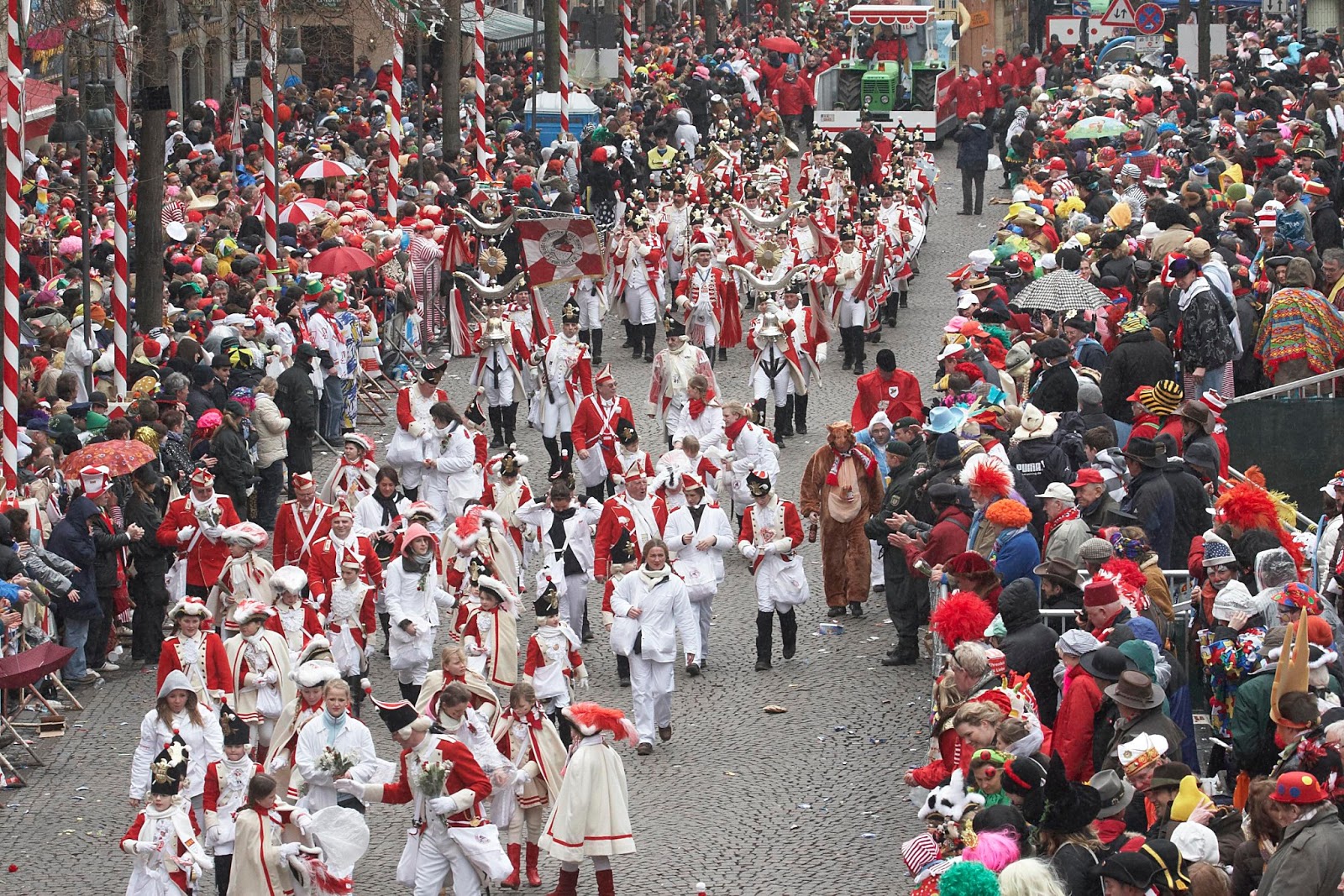
Five years ago I lived in Italy for a little while. In February 2009 I took a trip to Venice during Carnivale. Now, I have to admit, I find the whole mask wearing thing a bit creepy. Every time I went out, there were people wearing strange outfits and bizarre masks. It’s amazing how unnerving it is not to be able to see the faces of the people around you. Carnivale was a big party. The whole city was involved, and it all got me thinking about the meaning of the word Carnivale.

The word ‘carnivale’ was probably formed from the words ‘carne’ – meat, and ‘levare’ – to remove. Some think that the word may have different origins, but, seeing as carnivale always marks the approch of lent, the sentiment of preparing for a time of fasting by ‘removing the meat’ seems fitting. The climax of Carnivale is, of course, Mardi Gras, which simply means, ‘Fat Tuesday’. Having ‘lavared’ your ‘carne’, now, on the last day before lent, you make sure you use up any fat you have in your house in preparation for the start of the lenten fast on Ash Wednesday. Of course, in Italy and other Catholic countries, the word has now become synonymous with a great big party.

In Britain, we have nothing quite as extravagant or joyful as ‘Mardi Gras’. We have Shrove Tuesday, whose chief enjoyments consist in running around, flipping pancakes, and maybe dousing one with lemon and sugar before eating it. It all seems pretty dour, but I quite like it that way. To be honest, I think I would prefer a damp pancake to a street party. But then again, I think I would prefer almost anything to a street party! I'm not sure my time in Italy changed my British penchant for gloom. It is just possible that this delight in the dismal, goes way back into the history of the collective British psyche. Take the word ‘shrove’. It comes from the old English word ‘to shrive’ which means ‘to confess your sins to a priest’. On the continent, the day before the start of lent is marked by the last party before a time of slightly fewer parties (and a fair bit of sorrow for all the overindulgence). In Britain, we like to get on with our repentance early!

It is good to keep Lent seriously. We all know we are not as good as we might be, even if we don’t like to admit it. Lent is a time to be honest with ourselves and God, and to focus on the aspects of our lives in which we would like to bear a greater resemblance to Jesus. It is good to have a time of self denial, where we focus on those who have nothing, and remember how fortunate we are. But it is also useful to remind ourselves that, whilst abstinence can be good, it is not the only story God wants us to hear. It is ok to be shriven on Shrove Tuesday, so long as we remember that (by and large) the things we enjoy are enjoyable because God made the world good. So this Lent, may our abstinence lead us into a greater enjoyment of God’s good creation.

Saturday, February 09, 2013

Bleeding glory – Luke 9.28–36


‘Identity’ is very important. Governments invest huge amounts of money in developing ever more sophisticated identification documents. My passport can now work with a computer to recognise my face! And for this privilege, I had to pay £72! Then there is Identity theft, which is big business. Criminal gangs rifle through waste paper looking for information about us which can be used. And those lovely e-mails telling you that you have won the albanian lottery, or the helpful phone-calls from the Microsoft protection centre informing you that your Windows computer has a virus… I have some bad news… they may not be helpful and kind. They may, in fact, be from people who want to steal your identity, and probably your money too. Being able to prove who you say you are is very important.

Luke knew the importance of identity too. The ninth chapter of his gospel, which we have snippet of this morning, starts with a very powerful man asking a question about identity (9.7). Herod the Tetrarch had heard reports of Jesus and the twelve apostles he had just sent out to heal and proclaim the kingdom, and was perplexed. He had just had John the Baptist executed, but some people were saying that he had been raised from the dead. Others were saying that Elijah or one of the prophets had returned. Herod wasn’t convinced by these stories. Who, he wondered, could this Jesus he was hearing about be?

Peter thought he could answer that question: ‘God’s Messiah’, he said (9.20). But he had only begun to imagine what this might mean. And so Jesus filled in the picture. The Messiah would be rejected and suffer and be killed and be raised on the third day. The identity of the Messiah was way beyond what any of the disciples were prepared to imagine. Peter and the other disciples, despite making a good start, were hardly any clearer about Jesus’ identity than Herod.

It is only after we have the question posed by Herod and half answered by Peter, that we come to the mount of transfiguration. At last, the moment when all will be made clear. Jesus takes Peter, James and John to the top of a mountain to pray, and something that can only really be marveled at happens. As Jesus was praying, his face and clothing were visibly transformed. It is as though, for a moment, the veil of heaven is drawn back, and Jesus can be seen as he truly is. At last, we think. This is the Messiah we want! A shining face, glowing clothing, having intense, meaningful discussions with two of the most significant figures from Israel’s history. This is a Messiah who you can really worship!

But if we were merely to come to that conclusion, we would be paying as little attention as Peter James and John. Did you spot what these immensely privileged disciples were doing whilst their Lord was talking with Moses and Elijah? They were dozing, ‘Weighed down with sleep’, or possibly even ‘drunk with sleep’ (9.32). Peter, James and John were only partially aware of what was going on. The translation we have in the NRSV doesn’t quite do justice to this. It reads, ‘But since they stayed awake’, but the tense of the verb ‘awake’ in greek stresses the beginning of a new action. So a better translation is something like, ‘when they were beginning to wake up’.

Why did Luke tell us about these napping disciples? I think it is to show us, as clearly as he possibly could, that the three witnesses of the transfiguration failed to understand the most significant part of the event, and instead, fixated on the least important aspect. Peter, the spokesman for the three disciples, fixates on the glorious, shining Jesus, the Messiah they had all dreamed of, and he wanted to preserve that moment by building shelters for them to stay in. What the three disciples had missed, though, was the conversation between Jesus, Moses and Elijah. We read that they were ‘were speaking of his departure, which he was about to accomplish at Jerusalem.’ The word Luke used for ‘departure’ is literally ‘Exodus’. The Exodus was the story of how God delivered his people from slavery in Egypt, leading them through the sea, from death in Egypt to new life in the promised land. The discussion was about Jesus’ death to save his people, his resurrection to bring us new life. For Jesus, the transfiguration both confirmed who he was, and assured him that the path he was about to take to Jerusalem was God’s will. Here, on the top of the mountain, the Law and the Prophets agree that the Messiah will bring about a new Exodus for his people, and the Father adds divine approval. We are to listen carefully to the Son, because the teaching he offers leads us to know God more truly.

If we aren’t listening, if we are half asleep, the transfiguration confirms everything we expect God to be. Glorious, powerful, shiny. The kind of deity that we want to set up a shrine to. But if we stay awake and listen attentively we’ll realise that true glory isn’t found in the glowing face. It is found in the journey to Jerusalem, in the path of suffering to free his people. As one preacher put it, ‘Glory doesn’t shine, it bleeds’ (Debbie Blue, Sensual Orthodoxy).

Where do we expect to find glimpses of holiness? Beautiful worship? Exquisite music? A serene, ancient church? Perhaps we glimpse holiness in nature, when we look at a night sky or a sunset. Some people go on pilgrimage to holy places, or join religious communities. Some lock themselves in libraries to study the deep things of God. There are many ways we try to feel in touch with the spiritual, in which we experience the sacred, but the transfiguration challenges us, not to look for or hold on to the holiness that we expect to find, but to listen to the Son, to follow him  on the way of the cross, and to go on learning from him. Learning to see the God whose strength is revealed in the weakness of the cross may lead us to the same awed silence we see in the three disciples on the mountain top.

Thursday, January 24, 2013

Bonhoeffer – The Calling of Matthew


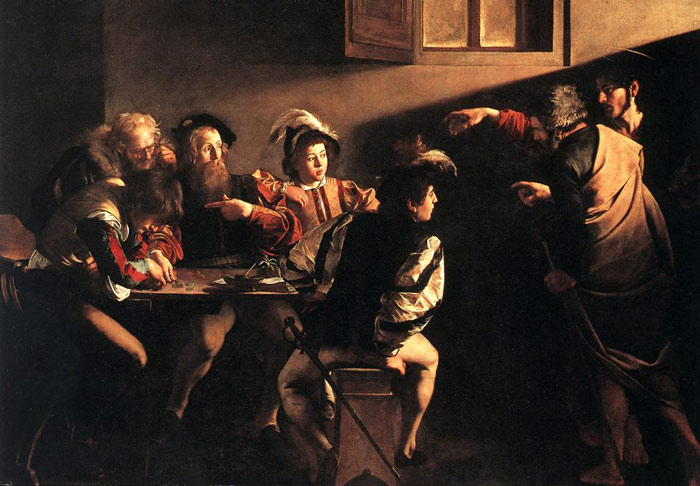
"Jesus went out again beside the lake; the whole crowd gathered around him, and he taught them. As he was walking along, he saw Levi son of Alphaeus sitting at the tax booth, and he said to him, ‘Follow me.’ And he got up and followed him." 
(Mark 2.13,14)


The call of Jesus goes forth and is at once followed by the response of obedience. The response of the disciples is an act of obedience, not a confession of faith in Jesus. How could the call immediately evoke obedience? The story is a stumbling-block for the natural reason, and it is no wonder that frantic attempts have been made to separate the two events. By hook or by crook, a bridge must be found between them. Something must have happened in between, some psychological or historical event. Thus we get the stupid question: Surely, the publican must have known Jesus before, and the previous acquaintance explains his readiness to hear the Master’s call. Unfortunately our text is ruthlessly silent in this point, and in fact it regards the immediate sequence of call and response as a matter of crucial importance. It displays not the slightest interest in the psychological reasons for a man’s religious decisions. And why? For the simple reason that the cause behind the immediate following of call by response is Jesus Christ himself. It is Jesus who calls, and because it is Jesus, Levi follows at once. This encounter is a testimony to the absolute, direct, and unaccountable authority of Jesus. There is no need of any preliminaries, and no other consequence but obedience to the call. Because Jesus is the Christ, he has the authority to call and to demand obedience to his word. Jesus summons men to follow him not as a teacher of a pattern of the good life, but as the Christ, the Son of God. In this short text, Jesus Christ and his claim are proclaimed to men. Not a word of praise is given to the disciple for his decision for Christ. We are not expected to contemplate the disciple, but only him who calls, and his absolute authority. According to our text, there is no road to faith or discipleship, no other road – only obedience to the call of Jesus.
  And what does the text inform us about the content of discipleship? Follow me, run along behind me! That is all. To follow in is steps is something which is void of all content. It gives us no intelligible programme for a way of life, no goal or ideal to strive after. It is not a cause which human calculation might deem worthy of our devotion, even the devotion of ourselves. What happens? At the call, Levi leaves all that he has – but not because he thinks he might be doing something worth while, but simply for the sake of the call. Otherwise he cannot follow in the steps of Jesus… When we are called to follow Christ, we are summoned to an exclusive attachment to his person. The grace of his call bursts all the bonds of legalism. It is a gracious call, a gracious commandment. It transcends the difference between the law and the gospel. Christ calls, the disciple follows. That is grace and commandment in one.”
(Dietrich Bonhoeffer, The Cost of Discipleship, 15–16)

Wednesday, January 16, 2013

Two went up into the Temple to pray...


                                                 Two went to pray? Or rather say
                                                 One went to brag, th' other to pray.

                                                 One stands up close, and treads on high,
                                                 Where th' other dares not lend his eye. 

                                                 One nearer to God's altar trod,
                                                 The other to the altar's God.

Richard Crashaw 1613–1649 

Tuesday, December 25, 2012

How silently...


Word came of a royal pregnancy, and the world was on fire with the news. St James’ palace announced that the Duchess of Cambridge was in hospital with severe morning sickness. They had to make the announcement earlier than they would have liked, but as soon as the news was out, there was scarcely a corner of the world which didn’t know of the royal pregnancy. The media had shouted it everywhere. It is hard to imagine news like this not spreading like wild fire.

But how silently, how silently the wondrous gift was given on the first Christmas day. I’ve sometimes wondered what Phillips Brooks meant when he wrote those words. It is of course possible that he was simply peddling the classic, sentimental picture of Christmas: The blessed mother, so virtuous that she scarcely felt any pain during child birth, but quietly delivers her child. The infant Lord, so splendiferously holy that he doesn’t cry or scream, but lies there, quietly gurgling, emitting a strange, etherial light. It’s the image of the Bethlehem stable found on thousands upon thousands of Christmas cards up and down the country, and which, we too, have represented in our own, beloved bucolic Christmas shed. If our statue of Mary is anything to go by, she has easily beaten Megan Fox, having lost her baby weight a matter of minutes after giving birth!

It is possible that Phillips Brooks meant us to think of Jesus birth that way. But I like to think that he knew better than that. Real babies don’t come without pain. Real infants don’t keep blissful silence. “The little Lord Jesus, no crying he makes”!? Pull the other one. How silently he came, but not in an otherworldly sense. Silently in that hardly anyone noticed that the greatest gift had come from heaven to human beings. Silently in that the Bethlehem advertiser wasn’t on the doorstep to report the news. Silently in that this birth was completely ordinary, just like millions of other births throughout history. There are many children whose lives get off to a worse start.

It is the ordinariness of this birth which Luke’s story captures so wonderfully. Politicians have plans to count up the inhabitants of the world, hoping to get a good idea of available wealth so that tax revenue can be maximised. A man travels to his home town, just like many other people, taking his fiance with him. He arrives to find a crowded town and makes his way, probably not to a commercial inn, but to the home of a relative to find lodging in their guest room. But the room was already filled with other relatives who had also made the journey to Bethlehem. So Joseph and Mary were were put up underneath the living quarters, where the animals might have slept, and the baby was found a feeding trough to sleep in. There isn’t anything too unusual about this scene, certainly nothing to betray the significance of the events.

When the infant Lord of all creation receives visitors, unlike Matthew, who has Jesus visited by members of a royal court, Luke’s visitors are ordinary working men, going about their ordinary business, perhaps gathered round a fire, playing games or music. Think of a night-watchman playing cards with his colleagues as they kept half and eye on their CCTV monitors. It was these ordinary people to whom the only royal announcement came on that beautiful, awesome night. Not to Augustus, or Quirinius, or Herrod, but to the kind of people you might meet at the pub. And it’s these ordinary people who, if we had read on a few lines, are themselves made God’s messengers: after the had seen the child,  they made known what had been told them about this child; and all who heard it were amazed at what the shepherds told them. (Luke 2.17–18)

A second century bishop, St Irenaus once said, ‘Just as the skill of a doctor is revealed in the care of his patients, so the nature of God is revealed in the way he relates to us’. And so at Christmas God is revealed to us as the lover of the ordinary. He is born in an ordinary place, in the ordinary way, he reveals his glory to ordinary people, and he asks for our ordinary lives to proclaim the good news of his love to a waiting world.

Wednesday, December 19, 2012

Jesus was baptised... as a baby?


The year of Luke has barely started, and I'm already having a gripe at the lectionary. For those who had more than enough the last time I wen't ballistic at the lectionary compilers, please forgive this additional outburst. I was doing some forward planning with our parish administrator this morning, and something struck us as rather odd about the chronology of the readings for the next month or so. Allow me to demonstrate:

Christmas day   –   Jesus' birth (Luke 2.1-20)
1st Sunday of Christmas   –   The twelve year old Jesus is found in the temple (Luke 2.41-52)
Epiphany   –   The infant Messiah is revealed to the Gentiles (Matthew 2.1-12)
Baptism of Christ   –   Jesus is baptised by John in the river Jordan (Luke 3.15-22)
3rd Sunday of Epiphany   –   The wedding at Canna (John 2.1-1)
4th Sunday of Epiphany   –   Jesus teaches in the Synagogue at Nazareth (Luke 4.14-21)
Candlemas (if transferred to the Sunday)  –  The infant Jesus is presented in the temple (Luke 2.22-40)
Sunday before Lent   –   Jesus is transfigured (Luke 9.28-43)

That is a really strange chronology. Jesus is born, and then is found reasoning with teachers in the temple. Next Sunday he is an infant again, being adored by the Magi. The next Sunday he is being baptised (yes as a grown man). You then ge a couple of weeks of 'grown man Jesus' texts. But then Candlemas arrives and you are back at an infancy text. The next week, inexplicably, Jesus is transfigured.

I really cannot help but think that all of this shows how the church calendar consistently mangles the narrative of the gospels. I often hear laments about how people don't know the basic gospel story anymore... perhaps the reason for that can be found at our own doorstep? When Jesus is baptised before he is presented in the temple, confusion is completely understandable. I don't even want to think about how the feast of the naming and circumcision of Jesus can come after he was found in the temple as a twelve year old! 

I know that the lectionary is not supposed to be chronological, and that there are difficulties with easter changing date every year. However, if your study of the gospels comes solely, or even mainly through Sunday worship, the odds of having a pretty weird understanding of the events of Jesus' life are huge.

Monday, December 17, 2012

God Sings in Advent – Zephaniah 3.14–20


I think it is fair to say that we live in a world which people afraid a lot of the time. The shocking news on Friday of the murder of twenty primary school children and six teachers in Connecticut in the USA, reminded everyone of how dangerous the world can be and how fragile human life is. That the hands of one man could end so many lives, barely begun, certainly fills me with fear. Fear of what human beings are capable of. Fear of what the response to all this might be, with people calling for teachers to be armed to defend their pupils.

Sometimes our view of God reinforces our general state of fearfulness. Advent is a time when we dwell long and hard on the coming judgement, when God will make all things right and just and true. But the world we live in isn’t just and true and good. I am not just and true and good much of the time. If God is coming as judge, what will happen to me?

It’s in the middle of this season where we are asked to think about the coming judgement, that we read a remarkable passage from the prophet Zephaniah. This Sunday, the third Sunday of Advent in year C, is the only chance we get to read the words of this Old Testament prophet on Sunday mornings. Zephaniah lived in the seventh century BC. Moral, religious and social corruption had chipped away at the life of the southern kingdom of Judah for almost fifty years under the reign of two terrible kings, Manasseh and Amon. Judah had become a wicked society, full of idolatry and the abuse of the poor. Zephaniah’s prophecy doesn’t take long to read through. It is only three chapters long, and it is full of God’s judgement, of fear and impending doom. 

But right at the end of the book is this joyful prophecy. Zephaniah tells us of the day of the Lord: a day of singing, a day when God’s judgement on his people has come to an end. Where Israel is no longer paralysed with fear. A time when arms that hung limp with terror can be raised up in praise to God. A time where God’s love will cause the people to rejoice and grow in strength, because God has come to live with his people.

Zephaniah is very carefully spelling out the hope of Advent. It is the hope that, however horrendous the world sometimes seems, judgement is never the last word. That God will come to save us and that we should not be afraid.

We live in a world of fear: ecological, environmental, political and economic fear. The media thrives on terrifying us on a daily basis. Depending on what news paper you read, you might have heard that the world will be coming to an end this Friday, according to an ancient Mayan calendar. Unless, of course, you live in the small french village of Bugarach, whose residents will be rescued by aliens. It is all quite ridiculous, but silly stories like the Mayan calendar apocalypse give voice to the deep, underlying fear which we all experience. 

So the question I want to ask is this: in a world permeated by fear, what would it look like if the church placed less emphasis on the fearful, terrifying God of judgement, and more on the God who rejoices and sings over us (Zeph 3.17). In the Hebrew scriptures the word most commonly used for God’s love is hesed, it means an unfailing, steadfast love and fidelity. It is as much a matter of the will as of the heart. It is a beautiful word which reminds us that God’s love for us is not dependent on how lovely we are. But in Zephaniah’s song, a different word for love is used. Zephaniah uses the word ahaba, a passionate love which delights in the beloved with songs of adoration. It is a beautiful word, because it reminds us that however bad we feel, however much we feel morally ugly, God finds us beautiful, and a delight to behold.

Perhaps the calling of the church in our day is to not be overcome by fear, but to rejoice, because God has come to be with us in Jesus Christ. It’s right to observe Advent properly, to prepare ourselves for Christ’s coming, and to try not to arrive at the manger too early. Advent is, after all, a time of waiting. But we’re not waiting to find out whether God loves us or not. We wait for our lover to return home. We wait for Jesus’ return with confidence and hope, rather than panic and fear. When God came among us in human form, when he united heaven and earth in his own person, he was singing a song of delight in his creation.

As we move further through December, the world is getting physically darker and darker. As it gets darker, we string up lights on trees and in the high street. In a way we try to battle against the darkness; to proclaim that light has come into the world and the darkness has not and never will overcome it. We are full of joy and excitement about Christmas. But I think when you scratch the surface, Christmas cheer soon disappears. We often feel a lot of Christmas anxiety: Are the family going to get on at the big get together? Will they like the gift I bought for them? Where on earth am I going to find the time to do everything that needs to be done? How am I going to pay off that credit card bill in January?

Advent is a time when we don’t have to burry those fears we have. It is a time to be honest about the things that trouble us. But as we feel the darkness around us, it is also a time to  listen to and rejoice in God’s song: ‘Do not fear, O Zion; do not let your hands grow weak. The Lord, your God, is in your midst, a warrior who gives victory; he will rejoice over you with gladness, he will renew you in his love; he will exult over you with loud singing as on a day of festival.’ (Zeph 3.16–17)